'Learning doesn't end when the lecture does'
Before ever taking their first step on campus, future Rotman Commerce students know to expect an academically rigorous program and courseload fitting of a world-class university and faculty.
What many don’t expect is how much they’ll also learn from the community surrounding them.
Between experiential projects, student organizations, conversations with professors, career programming, mentorship and classmates, RC students are surprised to discover a deeper layer of their university experience — one that isn’t outlined in the syllabus but shapes their confidence, career direction and personal growth.
Together, these experiences create a broader Rotman Commerce education shaped not only by coursework, but by the people, opportunities and discoveries surrounding it.
Class I: Learning through experience
A Rotman Commerce education begins in the classroom, where students build the analytical thinking, business foundations and technical knowledge that underpin their studies.
Beyond the classroom, students are invited to put those ideas into practice through case competitions, student organizations, work-study positions, experiential courses, research opportunities and industry projects. These experiences reinforce coursework by allowing students to apply concepts in new contexts, collaborate with others and discover where their interests truly lie.

For Cedric Furman (BCom ’28, Finance & Economics Specialist), discovering where his interests lay began by stepping into the unknown — uncertain where it would lead, yet curious enough to find out.
“I came into Rotman without a set path,” he says. “I decided that if I wasn’t sure what I wanted to do, I’d simply say yes to every opportunity that genuinely interested me.”
That mindset led him from participating in the Finance Foundations Program to being selected for the Capital Markets Accelerator Program (CMAP) — one of the most rigorous career-specific extracurricular programs at RC — to leadership within the Rotman Commerce Consulting Association (RCCA) and, eventually, an internship with EY. Looking back, he describes each experience as building naturally upon the last – developing new skills while introducing him to mentors, communities and career possibilities he hadn’t anticipated.

While Cedric’s path developed one opportunity at a time, Kailey Cheng (BCom ’28, Management Specialist) experienced learning beyond the classroom at a very different pace.
Imagine having just 3 hours to analyze an unfamiliar company, research its industry, build a financial model, develop a strategy and turn it all into a polished presentation — before defending every recommendation in front of a panel of judges from world-leading firms.
As a member of the Rotman Commerce Case Competition Team (RCCT), Kailey faced exactly that challenge. Some competitions stretched to 30 hours, requiring her team to keep researching, building and rehearsing.

“Case competitions taught me how to communicate ideas clearly, collaborate with different people and work under pressure,” she reflects. “The classroom gave me the foundation, but such extracurricular opportunities at RC helped me apply it.”
Rather than separating theory from practice, experiences like these help students see how the two continually reinforce one another.
As students gain experience, they also begin building something equally valuable: relationships.
Class II: Learning through community
If experiences expand what students learn, relationships often shape how they grow.
Whether through coffee chats with professors, conversations after class, mentorship, collaborative projects, or friendships formed through clubs, the Rotman community creates genuine opportunities for students to learn from one another.
Professor Adam Stoehr believes those relationships are an essential part of a student’s education.
“The most successful students aren’t simply collecting accomplishments,” he explains. “They’re building genuine relationships — with classmates, faculty, mentors and people who challenge the way they think.”

“Some of the most important parts of your university experience can come from a conversation after class, a coffee chat, or simply getting to know the people around you.” Those conversations extend learning beyond the lecture, offering perspectives that help students navigate uncertainty, explore new interests and recognize opportunities they may never have considered on their own.
Professor Inez Blackburn shares a similar guiding philosophy that shapes every aspect of her teaching: “Learning doesn’t end when a lecture does.”
For Blackburn, experiential learning is not an addition to the curriculum — it is essential to achieving meaningful learning outcomes. Through industry collaborations, guest speakers, coffee chats, applied projects and classroom discussions inspired by emerging topics such as artificial intelligence and consumer behaviour, she creates opportunities for students to move beyond understanding key concepts to applying them in authentic business situations.
These experiences bridge the gap between theory and practice. When students work alongside classmates, industry professionals and organizations to address real business challenges, they discover that complex problems rarely have a single correct answer. They learn to analyze information, ask better questions, consider diverse perspectives and communicate recommendations that balance creativity, strategic thinking and practical implementation.
Collaboration also becomes one of their most powerful teachers. By engaging with people who bring different experiences, expertise and viewpoints to the table, students strengthen essential professional capabilities, including critical thinking, teamwork, adaptability, problem-solving and persuasive communication.
Blackburn witnesses the impact of this approach every semester. Students who initially focus on finding the “right answer” begin to think and act more like professionals. They become increasingly comfortable navigating ambiguity, defending their ideas, responding to feedback and translating academic knowledge into actionable recommendations.
Experiences develop capability. Relationships build confidence. Together, they help students become more curious, resilient and career-ready while reinforcing another important dimension of the Rotman Commerce experience: learning how, and when, to seek guidance, build meaningful connections and draw upon the expertise of others.
Class III: Making the most of the Rotman Commerce ecosystem
One of the greatest advantages of studying at Rotman Commerce isn’t just the curriculum itself — it’s also the network of people and resources available to support students throughout their journey. Yet many students wait until they’re already in a bind, treating support as a last resort rather than a resource they can use from the beginning.
For Rob Michaud, Associate Director of Academic Services, that’s one misconception he hopes students can change.
“I encourage students to think of Academic Services as a place to plan, not just a place to solve problems.” Whether students are exploring specialist options, discussing professional designations, preparing for exchange opportunities or simply trying to make sense of their next steps, those conversations are most impactful when they begin early.

Over the years, Michaud has noticed a common thread among students who thrive, and it’s rarely about achieving perfect grades. Instead, they ask questions. They introduce themselves after class. They attend events, join communities, seek advice and remain open to experiences outside their original plans.
In other words, they stay curious.
“University moves quickly,” Michaud says. “The students who get the most out of it are usually the ones who don’t wait. They explore, they connect with people and they’re willing to take the first step.”
But no university journey unfolds through one step — or one kind of support — alone. While Academic Services helps students plan their academic paths, Career Services helps them imagine where those paths might lead and to get ready for anything.
According to Feven Gidey, Career Advisor (Core Services), career development begins long before students submit their first internship application. Rather than waiting until recruitment season, she encourages students to reflect on what they’re learning through coursework, clubs, employment and volunteer experiences while consistently building relationships, seeking feedback and exploring different paths.
“Not every experience needs to produce an immediate outcome,” Gidey explains. “Career development is not a linear or identical process for everyone and sometimes an event, conversation, or program helps a student discover a new possibility, strengthen a skill or build a relationship that becomes valuable later.”
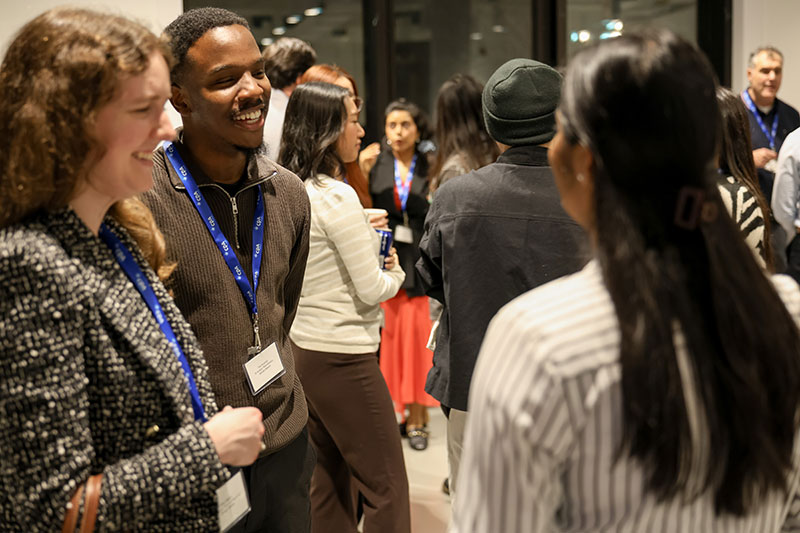
When students participate in career coaching, networking events, mentorship or special career-specific programs like Finance Foundations, CMAP, Management Consulting Accelerator Program (MCAP) and Consult for Impact, the goal isn’t to have everything figured out from the start. It’s to keep exploring, learning and taking the next step.
In the end, Rotman Commerce is more than just a degree. It’s the experiences students pursue, the relationships they build and the opportunities they embrace that bring their education to life.
Courses provide the knowledge. The surrounding community helps students apply it, challenge it and discover new ways to grow through experiences, mentorship, collaboration and support.
Together, they create an education that’s greater than any single course or extracurricular activity could offer on its own.
And that’s what makes a Rotman Commerce education unique. It’s not just what students learn in the classroom, but how the extended RC community helps those lessons come to life, both during the program and well into the future.
By Jenny Zhubin Chen (BCom ‘28) | August 21, 2026